
Benutzerin bedient Drucker, drückt Taste für Dokumentenverarbeitung im Büro. Effiziente Drucksteuerung.

DGUV V3 risks: consequences of non-compliance?

risks

Are you an entrepreneur? You bear responsibility. The safety of your employees is your top priority. But in day-to-day business, one issue often takes a back seat: the DGUV V3 inspection. Many managing directors see it as a bureaucratic burden. That is a dangerous mistake. Failure to provide proof of inspection is not a trivial offense. It is a direct path to liability.

We at Elektroprüfung Guru explain everything. We show you why testing your electrical systems and equipment is vital. We explain the legal pitfalls. We offer you the solution. Protect yourself from fines, recourse claims, and criminal consequences.

The legal situation: Why DGUV Regulation 3 is binding

DGUV Regulation 3 (formerly BGV A3) is not a non-binding guide. It is applicable law. It is based on the Occupational Safety and Health Act (§ 5 ArbSchG) and the Industrial Safety Regulation (BetrSichV). The law is clear on this point. Electrical systems must be safe. Anyone who ignores this is breaking the law.

These regulations serve to protect life and health. Accident prevention regulations require regular inspections. Certified specialists check that your equipment is in proper working order. If you violate this obligation, you are acting unlawfully. Worse still, you are acting negligently.
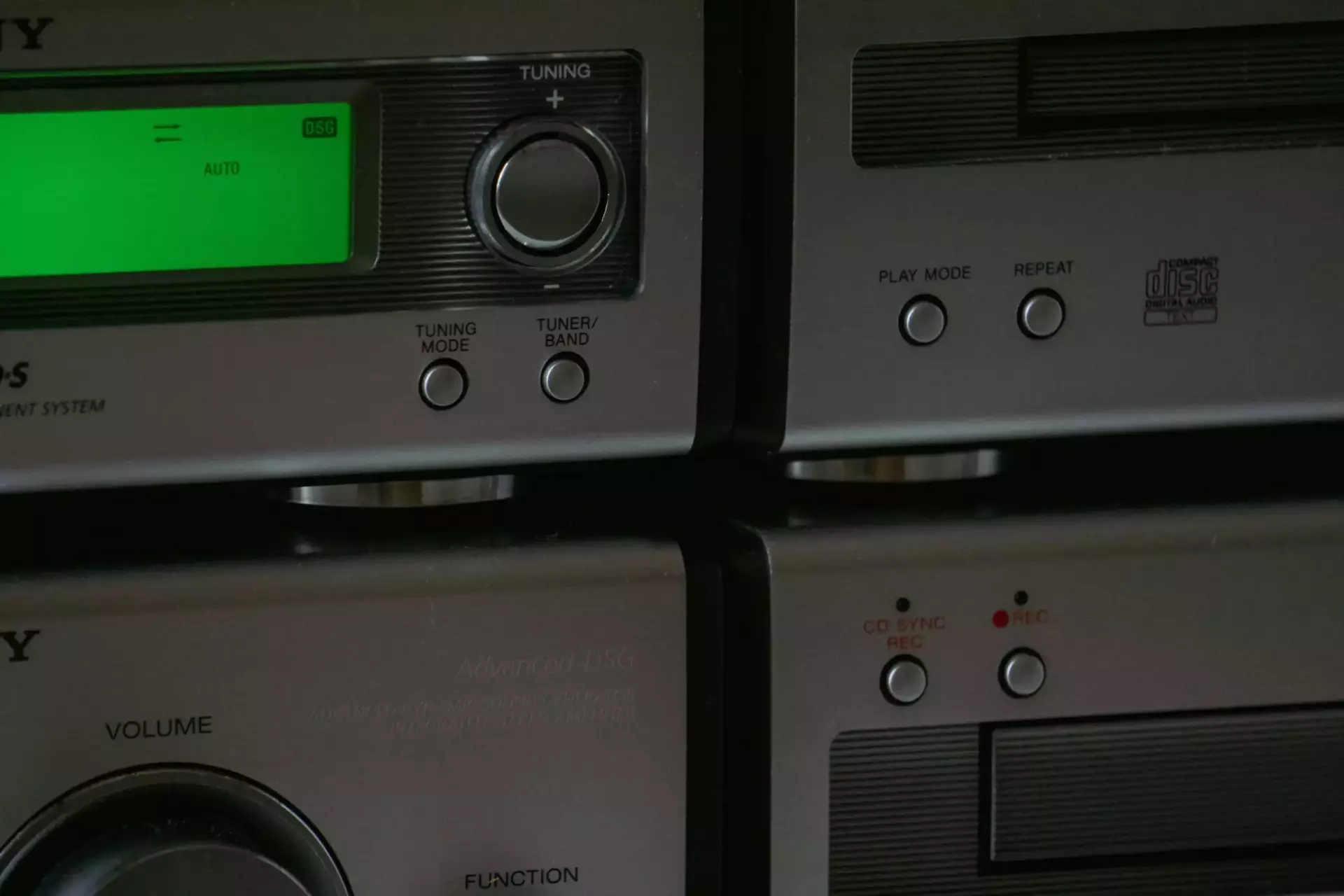

Retro-Stereoanlage mit grünem Display und Bedienelementen für Lautstärke und Wiedergabemodi.
Team Planning

Risk 1: Fines and criminal consequences

Violating the inspection requirement costs money. The authorities take this very seriously. If an inspection is carried out and no valid inspection report is available, the authorities will impose fines. These are based on Section 22 of the Occupational Safety and Health Act and Section 26 of the Industrial Safety Regulation. The fines are substantial.

  • Administrative offense: Failure to provide proof can result in fines of up to €10,000.
  • Criminal law: If an accident occurs, the public prosecutor’s office will get involved. In the event of personal injury, charges of negligent bodily injury may be brought.
  • Liability: If an employee dies from an electric shock caused by an untested device, negligent homicide may be charged. This can result in imprisonment.

The managing director is often personally liable. This is called organizational fault. You must prove that you have fulfilled your obligations. Without a DGUV3 inspection, this proof is impossible.

Benutzer bedient Kettensäge zum Schneiden eines Baumstamms im Freien.

Risk 2: Loss of insurance coverage

Insurance companies want to make a profit. When a claim is made, they look for reasons to refuse payment. A popular lever is “breach of obligation.” The fine print in your fire insurance policy is crucial here.

Property insurers often base their policies on the clauses of the VdS (Association of Property Insurers). A common clause states that the policyholder must comply with all legal requirements. If you fail to comply with the DGUV V3 inspection, you are in breach of contract.

The scenario is real and threatening:

  • A cable fire causes a fire.
  • The company building burns down.
  • The damage runs into millions.
  • The expert determines that the faulty device had not been inspected.
  • The result: The insurance company does not pay a cent. You are left with millions in damages. This often means bankruptcy.
Moderne, lichtdurchflutete Lobby mit großen Fenstern, Pflanzen und blauen Sitzgelegenheiten in einem Bürogebäude.

Risk 3: Recourse by professional associations

Bei einem Arbeitsunfall zahlt zunächst die Berufsgenossenschaft (BG). Sie übernimmt die Kosten für die medizinische Behandlung und die Invaliditätsrente. Die BG prüft den Fall jedoch genau. Stellt sie fest, dass der Unfall durch ein nicht geprüftes Gerät verursacht wurde, wird es teuer.

Die Rechtsgrundlage hierfür ist unter anderem § 110 SGB VII (Sozialgesetzbuch). Bei „grober Fahrlässigkeit” fordert die BG das Geld zurück. Dies wird als Regress bezeichnet. Sie zahlen dann die Behandlungskosten und Renten Ihres Mitarbeiters aus eigener Tasche. Diese Zahlungen können ein Leben lang fortgesetzt werden.

Kreissäge auf Werkbank vor Ziegelwand, bereit für Holzarbeiten im Freien.

Risk assessment and technical standards

The inspection is more than just a sticker on the device. It is an in-depth technical check. The basis for this is the risk assessment. Every entrepreneur must prepare this before using work equipment. It specifies when and how inspections are to be carried out.

The inspection itself follows strict technical rules. This is where TRBS 1203 and DIN VDE 0701-0702 come into play.

What exactly does the specialist check?

A quick glance is not enough. A standard-compliant DGUV3 inspection comprises three steps:

Inspection: Are any housings defective? Are any cables brittle?
Testing: Do the switches and safety mechanisms work?
Measurement: We use specialized measuring devices for this. We check values that cannot be seen with the naked eye.

The most important measured values include:

Protective conductor resistance: Does the cable safely conduct fault currents?
Insulation resistance: Is the insulation inside intact?
Loop impedance: Does the fuse trip quickly enough in the event of a short circuit?
Leakage current: Is current flowing through paths that are dangerous to humans?

Only a “person qualified to perform testing” in accordance with TRBS 1203 may carry out these measurements. Our experts at Elektroprüfung Guru meet these requirements exactly.

The DGUV V3 test report: your life insurance policy

The abbreviation DGUV stands for “Deutsche Gesetzliche Unfallversicherung” (German Social Accident Insurance). Regulation 3 governs the testing of electrical systems and equipment. Many people still know this test by its old name, BGV A3. Even though the name has changed, the goal remains the same: to prevent accidents at work caused by electric current.

An inspection without documentation is worthless. In legal disputes, only what is set down in writing counts. Our inspection report is your most important piece of evidence. It is “court-proof.”

A correct report contains:

  • Date of the test.
  • Type of test (initial test or repeat test).
  • Basis (e.g., DIN VDE 0701-0702).
  • Results of the individual measurements (measured values).
  • Evaluation (pass/fail).
  • Signature of the tester.

This document proves that you have done everything possible to protect your employees. It exonerates you in the event of damage. Elektroprüfung Guru provides you with this documentation in a clear, digital format.

Moderner Konferenzraum mit Holztisch, grünen Stühlen und großen Fenstern.

Frequently asked questions (FAQ) about DGUV V3

There is a lot of uncertainty surrounding DGUVV3. We answer the most important questions that entrepreneurs ask.

DGUV Regulation 3 is an accident prevention regulation. It was formerly known as BGV A3. It is published by the German Social Accident Insurance. It regulates the obligations of employers with regard to electrical systems and equipment. The aim is to prevent electrical accidents in the workplace.

Not every electrician is allowed to perform tests. According to TRBS 1203, it must be a “person qualified to perform tests.” This person must have specialist knowledge, electrical engineering training, and up-to-date testing experience. Calibrated measuring devices must also be used. Our teams meet all of these criteria.

DGUV 3 is the abbreviation for “German Social Accident Insurance Regulation 3.” It is the current name for the regulation governing electrical safety in companies. It is identical to the often still sought-after BGV A3.

Yes and no. New devices are considered safe if the manufacturer confirms this (the CE mark alone is not sufficient proof of initial testing at the place of use). We strongly recommend an initial inspection before commissioning (in accordance with DIN VDE 0100-600 or a visual inspection for devices) in order to rule out transport damage and document the safe initial condition.

Every employer is obligated. As soon as you employ even one employee and provide an electrical device, you must check. This applies to corporations as well as small home offices or craft businesses. Public institutions are also included.

Everything that runs on electricity. This ranges from the coffee machine in the kitchenette to the PC and printer to the large CNC milling machine in the hall. Extension cables and multiple sockets are also subject to testing.

DGUV V3 Prüfungen in ganz Deutschlands

+49 (0) 211 2204320

office@elektropruefung.guru